Skip to content

coczow CAT III digital multimeter vs Brennenstuhl True-RMS multimeter, 6000 counts

A stated safety category, or true-RMS?

Across five multimeters, one listing states a measurement category and one offers true-RMS. They are not the same meter. This page is about which gap you can live with.

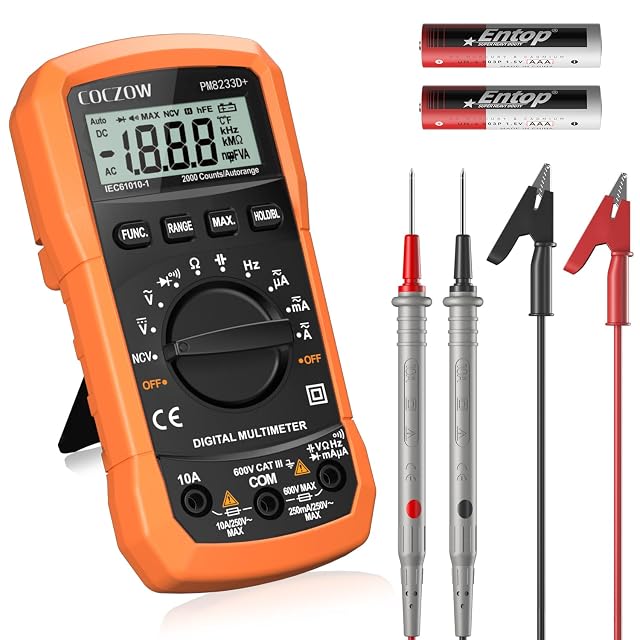
coczow digital multimeter with a backlit display showing a voltage reading

coczow CAT III digital multimeter

Wins 2 of 8

Check price

≈ $25 / £20 / 21 €

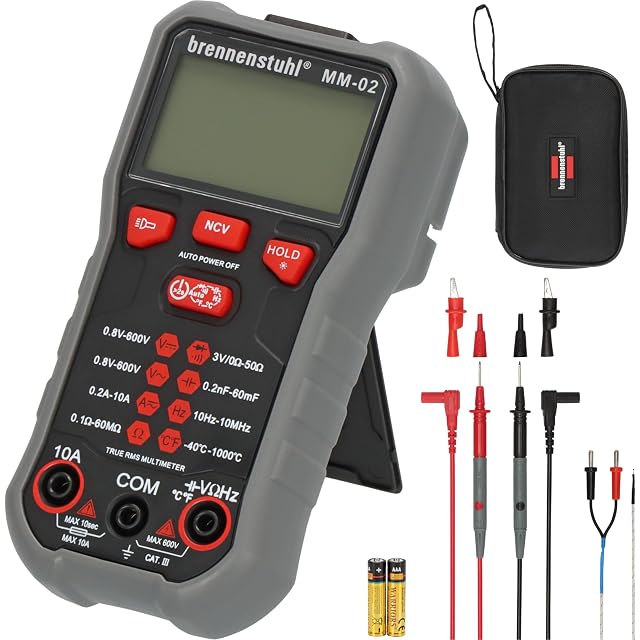
Brennenstuhl MM-02 multimeter with automatic range selection and its test leads

Brennenstuhl True-RMS multimeter, 6000 counts

Wins 4 of 8

Check price

≈ £35 / 32 €

Line by line

Compared on CAT III digital multimeter True-RMS multimeter, 6000 counts
Measurement category CAT III stated (voltage not given) Not published
True RMS Not published Stated
Counts 3½ digits 6000
Voltage range 600 V AC/DC Up to 600 V
Current range 10 A AC/DC AC/DC current, range not given
Extra functions Resistance to 20 MΩ, continuity Temperature, capacitance, frequency, diode, continuity
Probe tip caps Not published Supplied
Auto power-off After 15 minutes After 15 minutes

A tick marks the better answer on that line only. Counting ticks does not decide the page — the two verdicts below do, because these products answer different questions.

Which one, for whom

Buy the coczow CAT III digital multimeter

Buy the coczow if knowing where the instrument may be used matters more than what it can measure. Stating a category at all puts it ahead of four of the five meters in the hub.

Buy the Brennenstuhl True-RMS multimeter, 6000 counts

Buy the Brennenstuhl if the meter will be pointed at anything modern. True-RMS is the difference between a correct reading and a systematically low one on dimmers, drives and LED supplies — and read the manual for the category it does not print.

Questions people actually ask

Is "CAT III" without a voltage useful?

Partly. A category and a voltage are one specification, so CAT III alone is incomplete — and it is still more than the other four meters publish. The full rating is on the instrument and in the manual.

What does an averaging meter get wrong?

It assumes a clean sine wave and scales its reading accordingly. On a chopped waveform — a dimmer, an inverter, a variable-speed drive — it reads low, sometimes substantially.

The full reviews